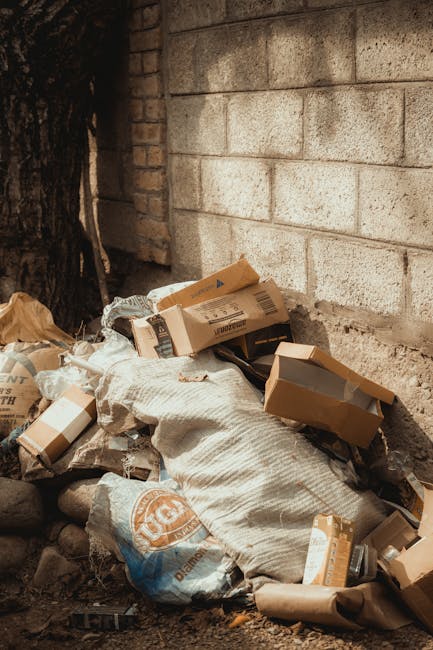
Pinner rubbish removal guide for High Street properties
High Street properties in Pinner bring a very particular kind of rubbish removal headache. You may be dealing with tight pavements, awkward rear access, mixed-use buildings, busy trading hours, neighbours right on top of you, and nowhere to leave a pile of waste for even an hour. Add in customer footfall, loading restrictions, and the simple fact that every job seems to happen at the worst possible time, and it can feel like more hassle than it should be.
This Pinner rubbish removal guide for High Street properties is here to make things easier. Whether you manage a shop, run an office above a parade of units, own a flat over a commercial premises, or are clearing out a property with little spare space, the aim is the same: remove waste safely, quickly, and with as little disruption as possible. We'll walk through how it works, what to plan for, the common mistakes people make, and which options tend to suit High Street settings best.
If you want a broader starting point on service options, it can help to look at rubbish removal alongside skip hire, because the right choice often depends on access rather than waste volume alone.
Table of Contents
- Why Pinner rubbish removal guide for High Street properties matters
- How Pinner rubbish removal guide for High Street properties works
- Key benefits and practical advantages
- Who this is for and when it makes sense
- Step-by-step guidance
- Expert tips for better results
- Common mistakes to avoid
- Tools, resources and recommendations
- Law, compliance, standards, or best practice
- Options, methods, or comparison table
- Case study or real-world example
- Practical checklist
- Conclusion
- Frequently asked questions
Why Pinner rubbish removal guide for High Street properties Matters
High Street properties are not typical domestic clearances. A terraced house on a quiet road gives you a very different set of options from a first-floor flat above a parade of shops. On a busy street, waste has to be removed with timing, access, and public safety in mind. That is the real issue here.
In practice, the wrong approach can lead to blocked entrances, unhappy neighbours, unnecessary permit issues, or waste sitting around longer than planned. You know the sort of thing: a few bags left by a doorway, a mattress leaning against a wall, cardboard starting to blow down the road. It is messy, and it looks unprofessional very quickly.
For businesses, presentation matters. For residents, convenience matters. For landlords and managing agents, speed and documentation matter as well. A good plan reduces disruption, helps protect the building, and makes it easier to stay on the right side of accepted waste handling practice. And honestly, when a street is already busy at 8:30 in the morning, anything that saves time is worth its weight in gold.
This is also where local knowledge comes in. High Street properties often have limited curb space, shared access, and a mix of private and public use. That means the best rubbish removal method is not always the biggest one. Sometimes the smartest option is the one that spends the least time in the wrong place.
How Pinner rubbish removal guide for High Street properties works
At a simple level, rubbish removal is about collecting unwanted items and taking them away for sorting, recycling, disposal, or reuse where possible. But for a High Street property, the method matters just as much as the collection itself.
There are usually three broad ways it can work:
- Kerbside or scheduled collection where waste is placed out at the agreed time and removed quickly.
- Wait-and-load style removal where the vehicle arrives, loads promptly, and leaves without the need to leave a container on the street.
- Skip-based removal where a skip is delivered, filled over a set period, and then collected.
Each route has its place. A shop refit with cardboard, shelving offcuts, and light fixtures might suit a skip or wait-and-load approach. A small office clearance could be better handled with man and van support or a dedicated office clearance service. A property with awkward access or a narrow frontage might benefit from wait and load skip hire, because it avoids keeping a container on the pavement for longer than necessary.
The key is to match the method to the building, the road layout, and the type of waste. That sounds obvious, but it gets missed more often than you'd think.
Most providers will also ask what you are removing, where it is located, and whether there are any access limitations. A quick photo usually helps a lot. If the property has basement stockrooms, narrow stairs, or a rear yard with restricted entry, say so early. It saves delays later and keeps everyone happier on the day.
Key benefits and practical advantages
When rubbish removal is planned properly for a High Street property, the benefits are not just about getting rid of waste. The wider gains are often more valuable.
- Less disruption to customers and passers-by because waste is removed in a controlled, timely way.
- Better use of limited space where pavements, forecourts, and rear access are all tight.
- Cleaner presentation for retail units, offices, and mixed-use buildings.
- Reduced manual handling when the right vehicle or team is used.
- More predictable scheduling compared with trying to do a clear-out in bits and pieces.
- Improved recycling outcomes when waste streams are separated sensibly.
There is another benefit that people sometimes overlook: calm. A well-run waste removal job removes background stress. No one wants to spend half a day wondering whether a pile of broken desks or renovation debris will still be outside when the lunchtime crowd turns up.
For larger or heavier loads, specialist services can be a better fit than general collection alone. For example, builders' waste from fit-outs may be better managed through builders waste removal, while heavier site-related material may call for grab hire services or even construction waste disposal. The practical advantage is simple: the right tool does the job faster and cleaner.
Who this is for and when it makes sense
This guide is for anyone dealing with waste in a Pinner High Street setting where access is not straightforward. That includes shop owners, landlords, tenants, office managers, contractors, letting agents, and residents living above commercial units.
It makes sense when you are dealing with:
- shop refits or stockroom clear-outs
- office decluttering or end-of-lease clearance
- flat clearances where stair access is narrow
- builders' waste from small works on a mixed-use property
- heavy household items that cannot be left out for normal council-style collection
- time-sensitive waste that needs moving on the same day
Sometimes the job is straightforward, and sometimes it is a bit awkward. A back-of-house area with a shared alleyway can be fine in dry weather and a nightmare after rain. A first-floor flat over a parade may be manageable with bags and box items, but awkward furniture can turn into a two-person lift before anyone has even had tea. Truth be told, the difference is usually access, not volume.
If your waste includes items like a fridge, an old sofa, or a mattress, those need a more specific approach. In that case, services such as fridge and appliance removal or mattress and sofa disposal may be the cleaner choice than trying to bundle everything into a general load.
Step-by-step guidance
If you want the smoothest possible result, break the job into clear steps. That saves time and avoids the usual back-and-forth on the day.
- Identify the waste type
Separate household rubbish, commercial waste, renovation debris, furniture, electricals, and anything potentially hazardous. Mixed waste is fine in many cases, but knowing what you have helps you choose the right route. - Check access properly
Measure doorways, stairwells, alleys, and any low arches. Look at where the vehicle can stop. A quick look from street level is not always enough, especially in older buildings. - Choose the method
Decide whether a skip, wait-and-load, man and van, or grab-style collection is most practical. For some high-footfall properties, man and van is the least disruptive option. - Confirm whether permits are needed
If waste will be left on the highway, check the permit position first. Skip placement on public land can be a different story from keeping it on private forecourt space. The difference matters. - Book for the right time
Early morning or quieter trading hours often work best. On a busy High Street, timing can make the whole operation feel twice as easy. - Prepare the items for collection
Bag loose rubbish, flatten cardboard, remove sharp edges where possible, and keep any restricted items separate. - Keep the route clear
Make sure hallways, shared entrances, and doorways are not blocked. A clear route speeds everything up and lowers the risk of damage. - Check what happens after collection
Ask how waste will be handled, whether recyclable materials are sorted, and whether there is any paperwork you should keep.
A small practical note: if you are clearing a property under time pressure, try to stage the waste in one place before collection. It is much easier than wandering room to room with half-full bags. And less chance of someone tripping over a rogue lamp shade, which happens more than people admit.
Expert tips for better results
Over time, a few habits make High Street clearances much easier.
- Book with access in mind, not just waste volume. Two small loads may be better than one oversized, awkward visit.
- Photograph the waste before collection. This helps with quoting, especially where access is tight or the load is mixed.
- Keep wet and dry waste separate where possible. Wet cardboard and broken plasterboard are heavier, messier, and harder to manage.
- Label anything fragile or sharp. It protects people handling the waste and reduces damage in transit.
- Use enclosed or lockable options where security matters. This is particularly useful for premises holding confidential stock or sensitive materials. A service like enclosed and lockable skip hire can be worth considering.
- Think about recycling before the job starts. It is easier to separate cardboard, metal, wood, and general rubbish at source than it is once everything has been tipped into one heap.
One more thing. If you are dealing with a genuinely busy street, do not assume a standard arrangement will work just because it worked elsewhere. A quiet side road and a High Street are not the same world at all.
For larger projects, reviewing skip sizes and prices can help you avoid paying for space you will never use. That is a common mistake, and an expensive one if you are not careful.
Common mistakes to avoid
Most waste-removal problems are preventable. They usually come from rushing the decision or guessing at the details.
- Underestimating access problems and then discovering the van cannot stop safely.
- Choosing a skip without checking permit needs when it will sit on public land.
- Mixing restricted or hazardous items with general rubbish.
- Leaving the collection until the end of a project when space is already under pressure.
- Forgetting about neighbours, customers, or staff movement around the building.
- Booking the wrong size and paying for a second visit that could have been avoided.
The hazardous waste point deserves special care. Things like chemicals, paint tins, gas bottles, certain electricals, and contaminated materials need proper handling. If there is any doubt, treat them separately and ask before loading. A quick check is much better than an awkward surprise later. Nobody wants that kind of surprise, let's be honest.
If your waste includes confidential paperwork, use a secure route rather than ordinary mixed rubbish. Confidential shredding exists for a reason, and on a High Street where businesses may be clearing offices or back-room files, that can matter just as much as physical space.
Tools, resources and recommendations
You do not need a long list of equipment, but a few simple tools make the process easier.
- heavy-duty rubble sacks or refuse sacks
- gloves and sturdy footwear
- a tape measure for access checks
- labels or marker pens for separating materials
- cardboard boxes for loose small items
- a phone camera for recording the site before collection
For planning, the most useful resources are usually the provider's service pages and policy information. If you are comparing options, start with what can go in a skip, then review recycling and sustainability if you want to understand how different waste streams are handled. That gives you a much better sense of what can be removed together and what should be separated.
It is also smart to check insurance and safety information before booking, especially if the job involves lifting through shared areas, tight stairs, or a public frontage. On a practical level, this is the kind of detail that prevents headaches later.
For booking and process clarity, book online can be useful when you want a straightforward next step. If you prefer to discuss the job first, the contact route is there too, but the big win is usually being clear about access from the outset.
Law, compliance, standards, or best practice
Waste removal in the UK comes with responsibilities, even when the job looks simple. You do not need to be a compliance expert, but you do need a sensible process.
The broad best-practice approach is to make sure waste is handled by a responsible carrier, not dumped informally, and that potentially restricted items are separated before collection. For High Street properties, this matters because waste often sits close to the public realm, where poor handling is more visible and more likely to cause issues.
Here are the main points to keep in mind:
- Do not place waste where it creates danger or obstruction.
- Check permit requirements if anything will be left on the highway. You can review skip permits and skip hire permits for the basics.
- Keep hazardous items separate. That includes materials that could leak, react, or create a risk during transport.
- Use sensible manual handling practice. Heavy lifting through stairs or narrow halls can be awkward and should be planned, not improvised.
- Protect public access where your property opens directly onto a busy pedestrian route.
Best practice also means choosing a disposal route that aligns with the waste type. Domestic mixed waste, building debris, commercial clearances, and green waste all behave differently. A single simple solution is not always the right one. A good provider will tell you that plainly rather than trying to squeeze everything into one answer.
Options, methods, or comparison table
Below is a practical comparison of the most common approaches for High Street properties in Pinner. The best choice depends on access, timing, and the type of waste. There is no magic answer, annoyingly enough.
| Method | Best for | Main advantage | Potential drawback |
|---|---|---|---|
| Skip hire | Medium to large volumes, renovation waste, recurring projects | Good capacity and flexible loading | May need a permit and space for placement |
| Wait-and-load | Busy High Street sites, limited frontage, quick clearances | No need to leave a skip on site | Requires efficient loading on the day |
| Man and van | Smaller clearances, mixed items, flats above shops | Very flexible and often easiest for awkward access | Less suitable for bulky demolition waste |
| Grab-style collection | Heavier loose material, external piles, site waste | Fast for bulkier loads | Needs enough vehicle reach and space |
If you are clearing a property with bulky general waste, domestic skip hire can work well for non-commercial loads, while commercial skip hire may suit a business clearance better. For tighter, more time-sensitive jobs, same day skip hire can be a useful fallback when plans change quickly.
Case study or real-world example
Imagine a small retail unit on Pinner High Street that has just changed hands. The back stockroom is full of broken shelving, old packaging, a damaged display cabinet, and a few bags of mixed rubbish. There is a shared doorway, a narrow rear route, and customers still using the shop front until early afternoon.
The obvious instinct might be to order the biggest skip possible and deal with it later. But that is not always the smartest move. In this kind of setting, the better option is often a quick access review first. If the frontage is busy and there is nowhere sensible to leave a container, wait-and-load or a small team collection can be cleaner and faster. The waste is staged inside, the vehicle arrives at an agreed time, the team loads efficiently, and the shop stays open with less disruption.
We have seen jobs like this work far better when the customer sends a couple of photos before the visit. It sounds basic, but it saves all the "oh, we didn't realise the alley was that narrow" moments. That one little step can change the whole plan.
Now compare that with a flat above a parade where a landlord needs furniture, old carpets, and a fridge removed after a tenancy ends. In that case, a mixed approach might be needed: house clearance for the general contents, plus specialist appliance handling for the fridge. Different property, different access, different answer. Simple, really, once you see it.
Practical checklist
Use this checklist before booking rubbish removal for a High Street property.
- Have you identified the exact waste type?
- Do you know whether items are general, bulky, recyclable, or restricted?
- Have you checked access at street level, rear access, and inside the building?
- Is there space for a vehicle to stop safely?
- Will any container need a permit or special placement arrangement?
- Have you chosen the right method: skip, wait-and-load, van, or grab?
- Have you separated confidential, hazardous, or fragile items?
- Will the collection time avoid peak customer or delivery periods?
- Have you cleared walkways and protected floors where needed?
- Do you know what happens to the waste after collection?
Quick expert summary: for High Street properties in Pinner, the best rubbish removal plan is usually the one that prioritises access, timing, and safety first, then waste volume second. If you get those three things right, the rest tends to fall into place.
Conclusion
High Street rubbish removal is never just about throwing things away. It is about fitting waste management into a busy, shared, often tight urban environment without causing problems for the people who live, work, and shop there. That is the whole game.
If you take one thing from this guide, let it be this: match the method to the property, not just to the rubbish. A little planning upfront can save time, reduce stress, and make the whole process feel far smoother than it first appears. And once you have done it properly once, you will notice how much easier the next clearance becomes.
Get a free quote today and see how much you can save.
Whether you are clearing a shop, an office, a flat, or a mixed-use building, the right approach should feel calm, tidy, and predictable. That is what good rubbish removal is meant to do, after all.
Frequently Asked Questions
What is the best rubbish removal method for a High Street property in Pinner?
The best method depends on access, waste volume, and how busy the street is. For awkward or time-sensitive sites, wait-and-load or man and van is often easier than leaving a skip in place.
Do I need a permit for rubbish removal outside a High Street property?
If waste or a skip will be placed on public land, a permit may be needed. If everything stays on private land, the position is usually simpler, but it is still worth checking before booking.
Is skip hire always the cheapest option?
Not always. Skip hire can be cost-effective for larger loads, but if access is tight or the waste is small and mixed, a quicker collection method may work out better overall.
Can I use rubbish removal for a shop or office clearance?
Yes. Commercial clearances are a common use case, especially where you need to remove furniture, packaging, stockroom waste, or general mixed rubbish without disrupting trading too much.
What items cannot go in general rubbish removal?
Restricted or hazardous items such as chemicals, some electricals, gas bottles, and contaminated materials usually need separate handling. If you are unsure, ask before loading anything.
How do I prepare a flat above a shop for rubbish removal?
Clear the route first, separate bulky items from bagged waste, and check stair access. Photos help a lot, particularly if the building has narrow hallways or shared entrances.
Is same-day rubbish removal available for High Street properties?
Sometimes, yes. It depends on availability, access, and the type of waste. Same day skip hire can also be useful when the situation is urgent.
What is the difference between wait-and-load and skip hire?
Wait-and-load means the waste is loaded quickly while the vehicle is there, so nothing is left outside for long. Skip hire gives you a container that stays on site for a period, which suits larger or slower clearances.
How can I reduce disruption to customers during a clearance?
Book outside peak times, stage waste in advance, keep entrances clear, and choose a collection method that avoids leaving equipment on the street for long.
What should I do with fridges, sofas, and mattresses?
Those items are often better handled through specific disposal services rather than general mixed waste. For example, fridge and appliance removal and mattress and sofa disposal are designed for exactly that sort of load.
How do I know whether my waste should go into a skip?
Start by checking the waste type and volume. If you are unsure what can be accepted, the what can go in a skip guide is a good place to begin before booking.
What is the safest way to handle waste in a busy High Street location?
Keep the route clear, avoid blocking the public pavement, use proper lifting practices, and choose a method that minimises time on the street. Safety and practicality go hand in hand here.
Can waste from a High Street property be recycled?
Often, yes. Cardboard, wood, metal, and some other materials may be separated for recycling depending on the load and condition. Recycling and sustainability information can help set expectations.
What if I only have a small amount of rubbish?
Small loads can still benefit from a professional collection, especially if access is awkward or the items are bulky. Sometimes a van-based collection is the simplest answer, and that is perfectly fine.
How do I get started?
Gather a few photos, note the access details, decide roughly what needs removing, and compare the most suitable service options. A clear brief at the start usually leads to a far smoother job.